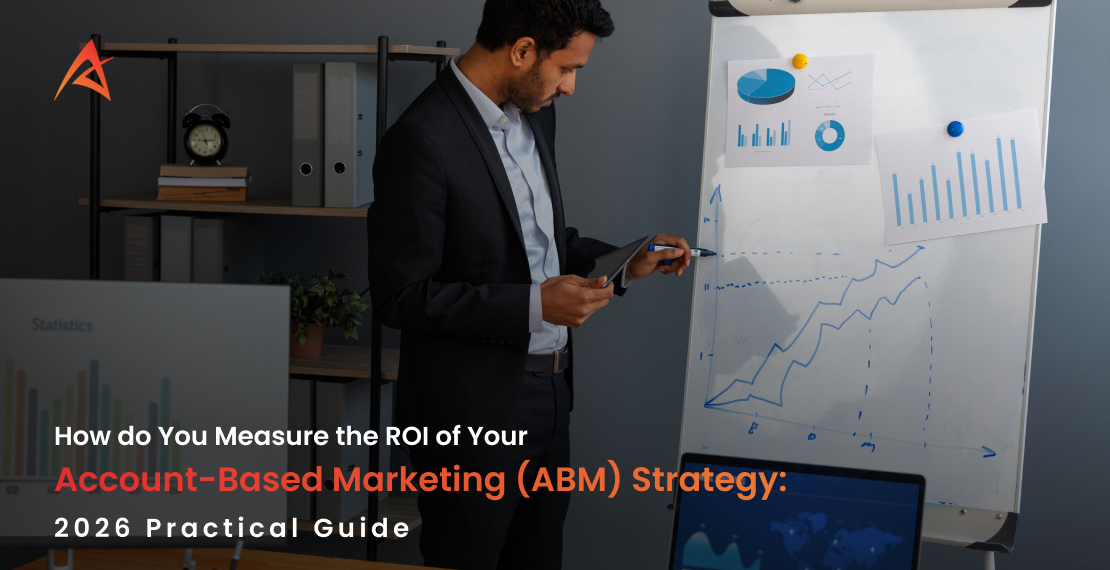

Account-Based Marketing has become central to how companies build relationships with high-value accounts, personalize engagement, and influence complex buying decisions. But with its rise comes a growing expectation: How do you Measure ROI in Account Based Marketing? Because it stretches across channels, touches multiple people inside one account, and influences decisions in ways traditional tracking systems don’t capture well.
This guide breaks down a practical 2026-ready method for Measure ROI in Account Based Marketing without making it overwhelming or overly technical.
The Importance of Measuring ABM ROI in 2026
ABM thrives when teams understand the clear line between investment and outcome. In 2026, buying cycles have become longer, decision-making groups have expanded, and personalization is practically expected. That means companies must be even more thoughtful about how much they spend and what they get in return.
Measuring ROI isn’t just about proving value; it helps you learn what’s working, where accounts are getting stuck, and what adjustments lead to better outcomes. The more clearly you understand the impact of ABM, the faster you can optimize your strategy and scale confidently.
What ROI Really Means for ABM in 2026
ABM ROI includes the traditional formula: ROI = (Return – Investment) ÷ Investment × 100%
But how return shows up in ABM is wider than many teams assume. Revenue is, of course, a key part of it, but ABM also influences things that aren’t instantly visible in closed deals.
In ABM, return often includes:
- Pipeline influenced by ABM activities
- Opportunities created from targeted accounts
- Shorter deal cycles
- Higher win rates
- Bigger average deal values
- Expanded accounts (upsell, cross-sell)
- Better renewal and retention numbers
The Core ABM ROI Metrics You Should Track in 2026
There are many metrics out there, and teams often struggle to decide what truly matters. So, instead of going through a long list, here we brought the metrics that genuinely help you measure impact without any hassle.
1. Engagement Metrics: Early Signals of Movement
Before revenue shows up, engagement tells you how well the account will perform. It’s not about clicks, it’s about meaningful interactions from the people you actually care about.
Common signs include:
- More key contacts are interacting with the content
- Deeper browsing on your product pages
- Multiple team members showing interest
- Repeated touches across channels
When engagement rises in the right places, it becomes a reliable early indicator of future pipeline.
2. Pipeline and Sales Velocity Metrics
Pipeline movement is where ABM starts proving itself. When accounts influenced by ABM progress faster or more confidently through the sales cycle, you know your strategy is working.
Important indicators include:
- Opportunities created from ABM accounts
- Deals are moving from stage to stage with less friction
- Higher win rates among ABM-targeted accounts
- A sales cycle that shortens over time
When ABM makes deals smoother and faster, it delivers real, measurable value.
3. Revenue Metrics: The Core of ABM ROI
This is where leadership usually pays the closest attention. These metrics reflect the financial return your ABM efforts generate.
- Revenue from ABM-sourced deals
- Revenue influenced through multi-touch engagement
- Increase in deal sizes
- Upsell or cross-sell revenue
- Retention and renewal impact
- Customer lifetime value
ABM focuses more on increasing the value of existing accounts over time rather than just getting new clients quickly.
4. Efficiency Metrics: The Condition of Your Program
Every program has its own expenses. While ABM can be very effective, it can also be costly if not executed correctly. Keeping an eye on efficiency allows you to be wise about how you spend your money.
Useful metrics include:
- Cost to engage each account
- Return per account tier
- Overall cost-to-revenue ratio
- Performance differences between channels
Efficiency metrics help refine strategy and avoid wasted spend.
A Simple Guide to Checking ABM ROI
Checking the returns on your ABM work is easier when you have a clear plan. Here’s a step-by-step guide that works for most businesses.
1. Begin by Choosing the Right Accounts
This first step is really important. If your list of accounts is unclear or scattered, even a great ABM strategy won’t give good results.
Take your time to define:
- The ideal customer profile
- Account tiering
- Agreement with sales teams
Good ROI always begins with choosing the right targets.
2. Map the Buying Committee and Key Roles
Most high-value deals involve groups of people, not a single buyer. Knowing who shapes decisions helps you track engagement more meaningfully.
This often includes:
- Directors
- Managers
- Buyers
- Technical reviewers
- Top-level managers
Once you know what each person does, you can see how involved they are and find signs of their interest early on.
3. Set Up Pre-ABM Benchmarks
You can’t see how far you’ve come if you don’t know where you started. Before you begin ABM activities, write down numbers like:
- Current levels of engagement
- Current deals or opportunities
- Win rates and deal sizes
- Relationship health
This makes your impact easier to prove later.
4. Use a Realistic Attribution Model
ABM is effective when marketing, sales, and customer success teams work together. A solid way to give credit for this teamwork acknowledges how complicated it can be.
You can try:
- Models that track multiple interactions
- Models based on influence
- Or a combination of both types
The most important thing to remember is to keep things stable. You need to have a strategy that reflects what is really happening and remains reliable over time.
5. Calculate ROI Taking into Account all Expenses and Profits
Be open about expenses. Account-based marketing (ABM) involves tools, content, ads, events, and your time. Bring everything. After that, check:
- Revenue affected
- Money gained
- Faster pipeline development
- Value from growth
The more honest the numbers, the more useful the insights.
6. Build Dashboards That Leadership Understands Easily
Even the best ROI calculations fall flat if reporting feels confusing. Senior leaders want simplicity. They want to understand:
- Which accounts are progressing
- What ABM contributed
- What changed in the pipeline
- Where budgets should go next
Clear dashboards build confidence and help secure more resources.
Common Errors That Mess Up ABM ROI
A lot of ABM programs don’t show any real difference because the way we measure them isn’t working. Here are some mistakes to steer clear of:
- Putting too much focus on surface-level numbers
- Thinking of ABM as just a quick project
- Ignoring growth and keeping customers
- Trying to track too many key performance indicators gets confusing
- Teams not being on the same page
- Letting customer relationship management data get old
A Simple and Realistic ABM ROI Example
Let’s consider you targeted 40 high-value accounts over the year. After running your ABM program, here’s what you recorded:
- Total ABM cost: $180,000
- Revenue from deals won: $900,000
- Additional influenced pipeline: $500,000
Let’s calculate:
Total return: $1.4M (direct + influenced)
ROI = (1,400,000 – 180,000) ÷ 180,000 = 677%
Even if you only count direct revenue, ROI still stands strong at 400%.
This is the kind of clear, straightforward calculation leadership appreciates.
Best Practices to Improve ABM ROI Over Time
ROI gets better when groups focus on improvement. Here are some habits that always make a difference:
- Keep your CRM information accurate and full.
- Stay on the same page with the sales team.
- Create content that matches the roles in the buying committee.
- Update account lists on a regular basis.
- Use information on intent and behavior to decide what to focus on.
- Check how things are going every month instead of once a year.
These tiny improvements add up over time.
Take Your ABM ROI to the Next Level
The more ABM grows, the more organizations need a reliable way to understand its impact. ROI isn’t about tracking every little action; it’s about understanding how accounts move, how relationships strengthen, and how revenue grows as a result.
When teams measure ABM with discipline and clarity, the strategy becomes easier to justify, refine, and scale. In 2026, the companies winning with ABM aren’t the ones doing the most; they’re the ones measuring the smartest.
If you want clearer ABM reporting, better attribution, or dashboards that executives trust, A Market Force can help you build a measurement system that proves and improves your ABM ROI.
Frequently Asked Questions
1. How can you quickly determine the return on investment for ABM?
Check the profit made from ABM accounts and compare it to the amount spent on ABM.
2. What sets ABM ROI apart from regular marketing ROI?
ABM looks at whole accounts rather than just individual leads, so you have to consider its total effect and long-term advantages.
3. How long does it take to notice results?
ABM ROI generally starts to show within 3 to 12 months, depending on the size of the deals and the sales process.
4. Which metrics matter most?
Engagement depth, pipeline influence, win rates, deal size, expansion revenue, and lifetime value.
5. Does ABM work for retention and expansion?
Absolutely. ABM is highly effective in strengthening existing relationships and expanding accounts.


 By
By