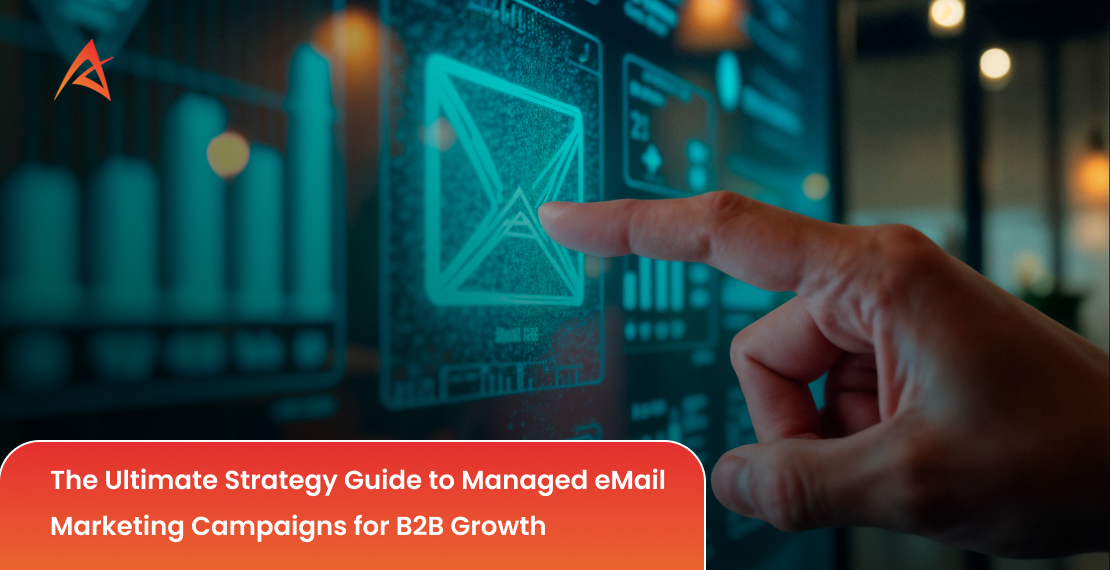

Email marketing has changed quietly. Not in a loud, headline-grabbing way. But in how it fits into B2B growth today. It’s no longer just about sending newsletters or product updates. For most B2B brands, email now sits right in the middle of lead nurturing, sales enablement, and long-term relationship building. That’s where Managed eMail Marketing Campaigns come in as a system with potential conversion.
This guide breaks down what managed email marketing actually looks like in practice, why it works so well for B2B businesses, and how it supports consistent, measurable growth when done properly.
What Are Managed eMail Marketing Campaigns?
At its core, a managed email marketing campaign means you’re not just sending emails, you’re running a process. Strategy, planning, copy, design, automation, testing, reporting. All of it is handled as one connected effort, usually by a dedicated team that focuses only on making email perform better over time.
This is very different from the typical internal setup where email takes precedence over other priorities.
In the managed model:
- Campaigns are planned based on business goals, not a calendar
- Emails are written for specific segments, not entire lists
- Performance reviews are done regularly, not occasionally
This structure is especially important for B2B companies. The buying cycle is long. Decision makers are cautious. An email rarely moves the needle. A sequence occurs frequently.
Why Managed eMail Marketing Campaigns Matter for B2B Growth
B2B growth does not happen in a straight line. A potential client can download a resource today, go silent for two months, then suddenly reappear when the budget opens up. Managed email campaigns are designed for exactly this type of behavior.
Rather than rushing for immediate results, they try to:
- Stay noticeable without being annoying
- Teach without pushing too hard to sell
- Create trust gradually over time
This is an area where many B2B teams face challenges. It’s not that email isn’t effective; the problem lies in keeping things consistent inside the company. Managed campaigns help solve that issue. They create a steady rhythm of communication that supports sales teams, drives leads naturally, and keeps your brand relevant even when prospects aren’t ready to buy yet.
The Strategy Behind High-Performing Managed Email Campaigns
Good managed email marketing starts long before the first email is sent.
It starts with questions:
- Who are we talking to?
- What problem are they trying to solve right now?
- What usually blocks them from moving forward?
From there, strategy takes shape.
- Audience Segmentation: Not all leads should hear the same message. Segmenting by role, industry, behavior, or funnel stage changes how emails are written and when they’re sent.
- Life cycle thinking: A first-time customer does not need the same message as someone who has already spoken to in sales. Managed the campaigns, mapped them clearly, and created sequences that matched the intent.
- Personalization that feels real: It goes beyond the name tag. It’s about relevance, content that reflects what the reader really cares about at that moment.
- Automation With Restraint: Automation supports the strategy; it doesn’t replace it. The goal is to deliver timely messages without losing the human tone.
Common Types of Managed B2B Email Campaigns
Most successful managed email programs don’t rely on a single campaign type. They use a mix, depending on where leads are in their journey.
- Welcome and introductory emails: These set expectations early and introduce your value without being pushy.
- Leadership Nursing Sequence: Often Didactic. Sometimes temperamental. Always useful. These are designed to build familiarity and trust.
- Re-engagement campaigns: Used when contacts have gone silent. Not aggressive. That’s all it takes to reopen the conversation.
- Account-based email campaigns: Highly targeted emails tailored to specific accounts or decision-makers. Especially effective in complex B2B sales environments.
- Post-conversion emails: Onboarding, product education, retention, upsell. Email doesn’t stop after the deal closes.
Tools and Technology Behind Managed Email Marketing
Tools matter, but they’re rarely the problem. Most businesses already have access to a capable email platform. What is missing is the strategy that ties everything together.
Managed email marketing typically includes:
- An email service provider or automation platform
- CRM integration for clean data and tracking
- Analysis tools to understand engagement and attribution
- Delivery and compliance checks to protect the sender’s reputation
The difference comes from how these tools are used, not which ones are chosen.
Measuring Success: What Email Marketing ROI Really Looks Like
One of the biggest advantages of managed email marketing is visibility. Instead of guessing what works, performance is tracked continuously.
That usually includes:
- Engagement trends (not just one-off open rates)
- Click behavior across different segments
- Lead progression through the funnel
- Contribution to pipeline and revenue
In B2B, ROI often shows up gradually. Fewer cold leads. Better conversations. Shorter sales cycles. Managed campaigns are designed to support that long game.
Managed vs In-House Email Campaigns: A Practical Comparison
Some B2B companies manage email in-house and do it well. But it is rarely easy.
Home teams often meet:
- Limited time for testing and optimization
- inconsistent execution
- Email is considered a secondary task
Managed email marketing services offer a different model where email gets the focus it deserves.
For growing companies, this usually means:
- Quick repetition
- Clear strategy
- More reliable results
It’s not about outsourcing responsibility. It’s about adding structure.
Best Methods for Running Managed Email Marketing Campaigns
Increasing email outreach without losing interest from your audience takes careful planning. Here are some rules to follow:
- Make sure your lists are tidy and current
- Be mindful of how often you send emails; sending more doesn’t always mean better results
- Keep testing all the time, even if your campaigns seem to be doing great
- Follow data and privacy laws
- Use what you learn from performance to improve your messages
Managed campaigns work best when they are treated as an evolving system, not a fixed setup.
How A Market Force Approaches Managed Email Campaigns
At A Market Force, we see email as a key way to grow, rather than just a help or support tool. Our team designs campaigns that are focused on real business goals instead of just looking good on paper. We prioritize planning first, then putting it into action, and we make changes based on how well things are working.
We concentrate on:
- Being relevant instead of just having a lot
- Staying consistent instead of chasing quick success
- Focusing on long-term profits rather than short-term rewards
This method helps email do what it’s best at in the B2B world, which is to support growth in a steady and effective way.
Final Thoughts
Email still carries its value, but you have to tackle poor execution to see the desired result. When done with a careful plan, managed email marketing campaigns can become a reliable way for a B2B company to grow. They help build trust, speed up sales, and keep people engaged, as few other methods can.
If you care about growing your business, being flexible, and seeing real results, consider putting money into managed email marketing starting today.
FAQs
1. Is Managed Email Marketing Good for B2B Companies?
Yes, it is. It is particularly helpful for businesses that have long sales processes and need input from several people before making a decision.
2. How long does it take to notice results?
You can often see changes in how people engage quickly. However, the effect on income usually takes a few months to show.
3. Which industries gain the most from it?
Companies in SaaS, technology, professional services, manufacturing, and those that focus on other businesses benefit the most.


 By
By